 view more about Península Valdés
 view page of Chubut
 share this post
IMPORTANT: Some data, image or video may be from 2013 or before.

Information
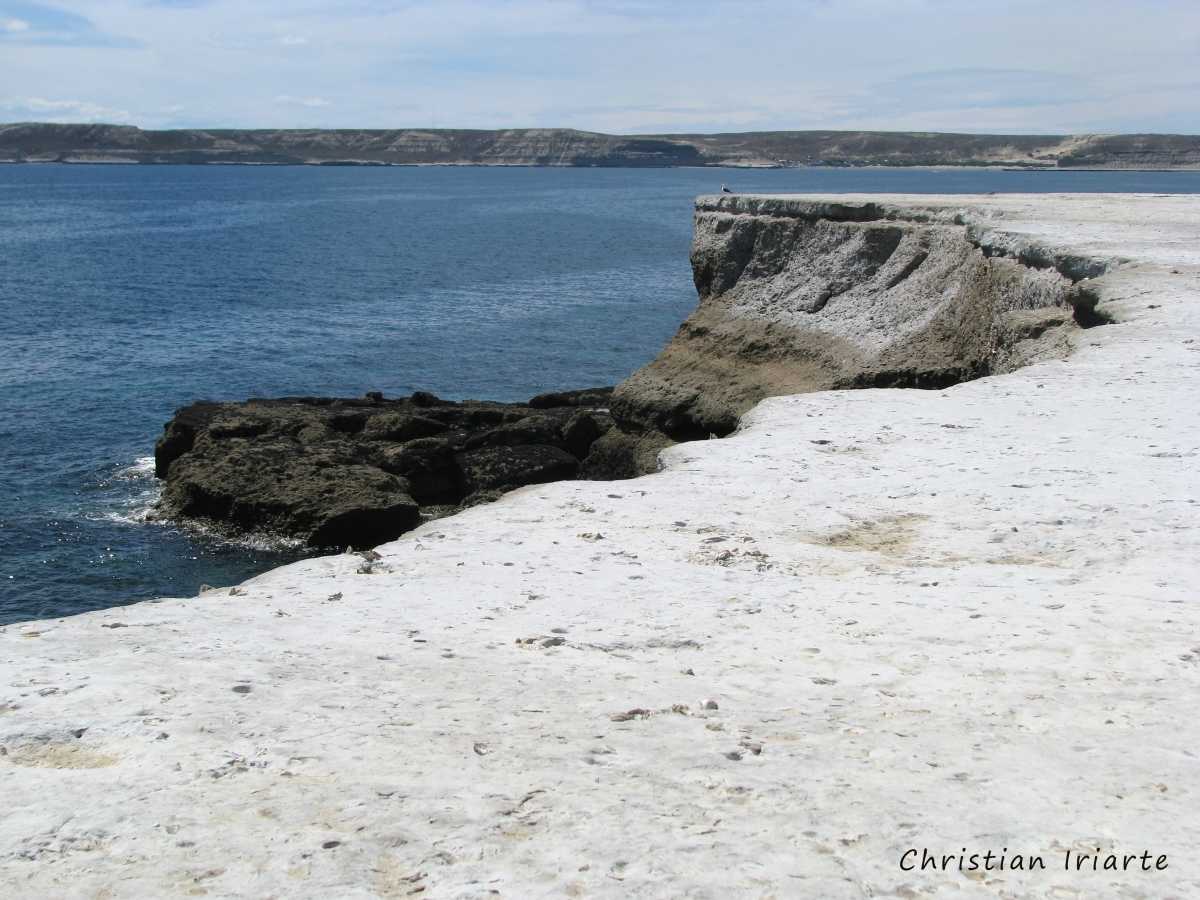
Visiting the Valdés Peninsula is a must for those who are interested in nature. This protected area allows you to observe unique landscapes, and has a good infrastructure to be able to see its wildlife comfortably.The general environment that can be seen is steppe. On the coast there are parts with cliffs, and others with beaches and coves. In the centre of the peninsula there are areas with depressions or lowlands, which can be as low as -40 metres above sea level.
First of all, a recommendation I would like to give to those who drive vehicles is to drive slowly on the roads. On the one hand, there are frequent wildlife crossings. In addition, the wide gravel roads are deceptive and it is common not to realise that there are loose stones, so braking at high speed can cause the car to skid and overturn.
If we take as kilometre 0 (zero) the entrance post where the entrance ticket is paid, following this Provincial Route 2 we see the following tourist attractions:
a) At kilometre 23 we reach a roundabout by where there is an interpretation centre, which has rooms with exhibits and information about the nature and fauna of the area. There is also an observation tower and toilets.
b) From this same roundabout, there is a gravel road to the north that after 5 km leads to a viewpoint of the Isla de los Pájaros, where there are binoculars to observe it. This bird-filled islet is 1 km from the coast, which joins the mainland at low tide, but access is not allowed for conservation reasons.
c) At km 46 there is an asphalt road to the right, which after 2.5 km forks. If you take the gravel road on the right, after about 4 or 5 km you will reach Punta Pirámides, a point and nature reserve where there is a colony of sea lions. On the other hand, if you continue along the asphalted road you will arrive at Puerto Pirámides, the only populated village on the peninsula, from where nautical excursions depart for diving and between June and October for southern right whale watching.
d) At kilometre 50.5 a dirt road turns off to the right. This road passes through an area of dunes. After 9 kilometres you reach Punta Pardelas (another point, Pardelas Point), which has a unique coastal landscape.
e) At km 52 the provincial route 2 forks again. If you take the left road it is 67 km to Punta Norte, where there is a visitor centre with walkways to see elephant seals, sea lions, and killer whales in March and April.
f) At km 138 you reach Punta Cantor, where there is a car park, restaurant and a trail with lookout points where you can see elephant seals.
g) At km 140 you start to see the Caleta Valdés (Valdés Cove), a spectacular landscape. A cove is a formation where a strip of sand or land runs parallel to the coast, with sea water in between.
h) At km 144 there is a penguin colony, with an access from the road to observe it.